 +44 7447 196106

Dental Implants in Antalya, Turkey
Dental Implants. Restore your smile.
Explore dental implant treatment in Antalya, including All-on-4 and All-on-6. Your dentist will assess your needs and explain the proposed treatment, implant brand and planned visits.
Understand Your Implant Quote
Ask our team to confirm the number of jaws being treated, implant and restoration details, planned visits and any items quoted separately.
Request a personalised quote using the form or WhatsApp. Your treatment plan and timing will be confirmed following assessment.
Get Your Personalised Price Quote Now!
What are Dental Implants?
Dental implants are a permanent and stable method thanks to the screws that replace the tooth roots. It eliminates the problems with your damaged teeth. Most people experiencing tooth loss prefer dental implants to get rid of the problem. It is the most optimal procedure to have healthy and strong teeth.
Dentures and bridges sometimes do not fit well into the gap between teeth. Because the lack of tooth roots does not allow dentures or bridges to be strong enough. In this case, dental implant surgery provides a good solution. The titanium edges of the implants merge with the jawbone and create a strong foundation. Therefore, the implant has a stable condition not to damage the bone and gum as bridges and dentures do when they glide.
What is the Best Type of Tooth Implant?
It is not good to accept any certain type of dental implants as the best choice without a deep medical examination. The type of dental implant you can choose may vary depending on how healthy your jawbone is, how many teeth you have missing, and your other special needs. You can decide whether endosteal or subperiosteal implants are best for you with the help of your dental implant specialist.
Dental Implant Brands used by Lara Smile


How Does Dental Implantation Proceed?
The period of planning is the most significant step of the process. A meticulously structured treatment plan is the best way to place the implants.

- Special imaging and 3D imagining help dentists understand the jawbone’s condition and place the implant properly.
- Removal of damaged teeth.
- If necessary, bone grafting to prepare the jawbone.
- Placement of metal posts into the jawbone.
- Attachment of temporary crown to the abutment by using local anesthesia.
- Your dentist will confirm when your temporary teeth can be replaced with your final zirconium restorations as part of your individual treatment plan.
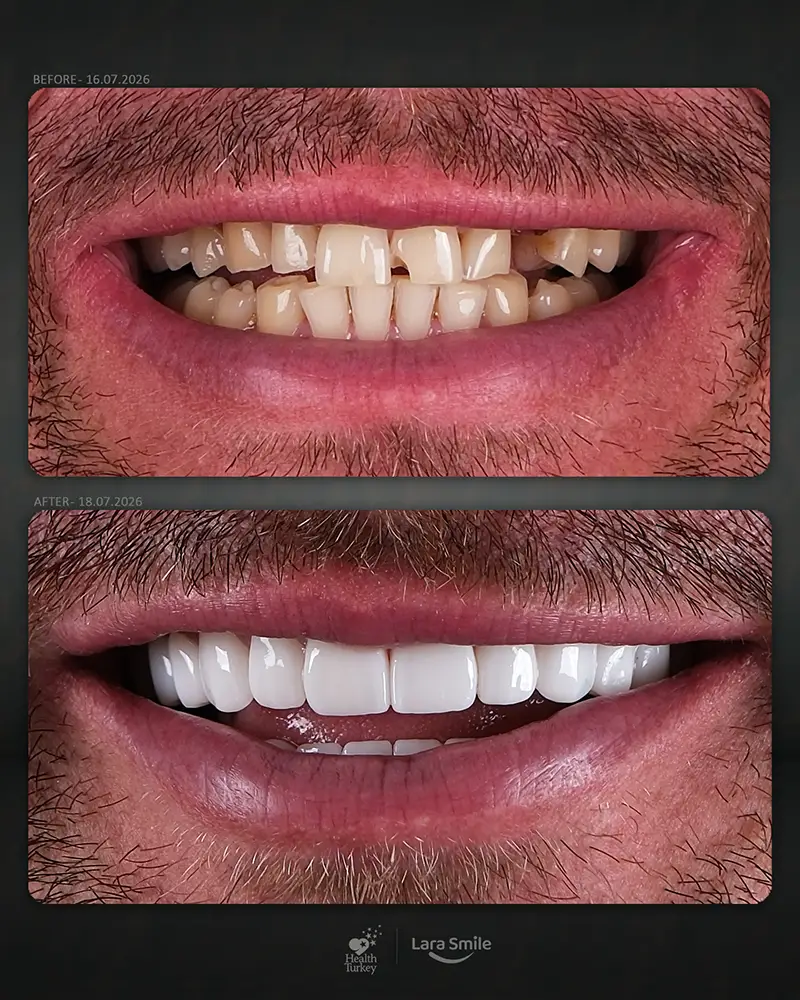
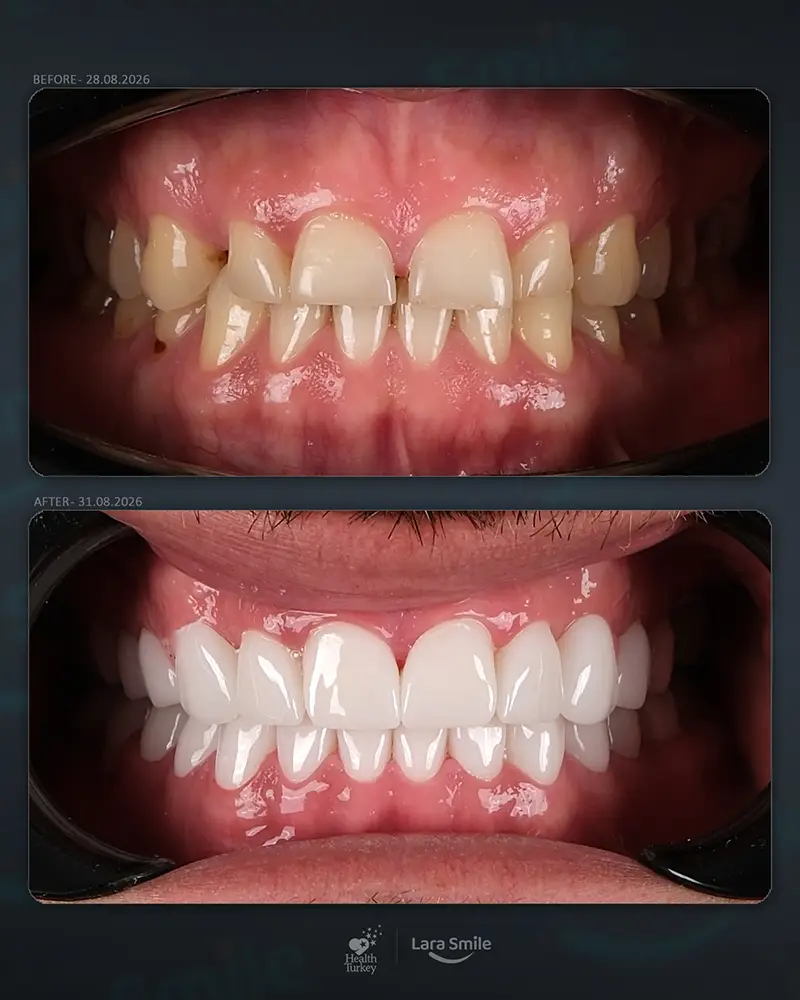
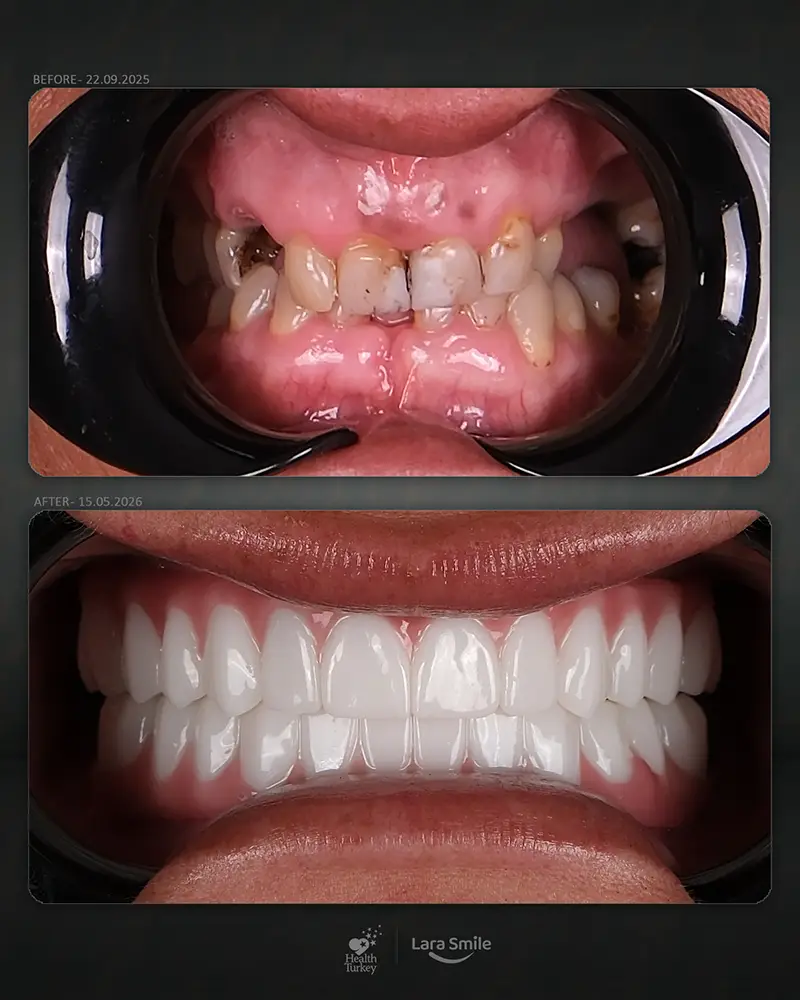
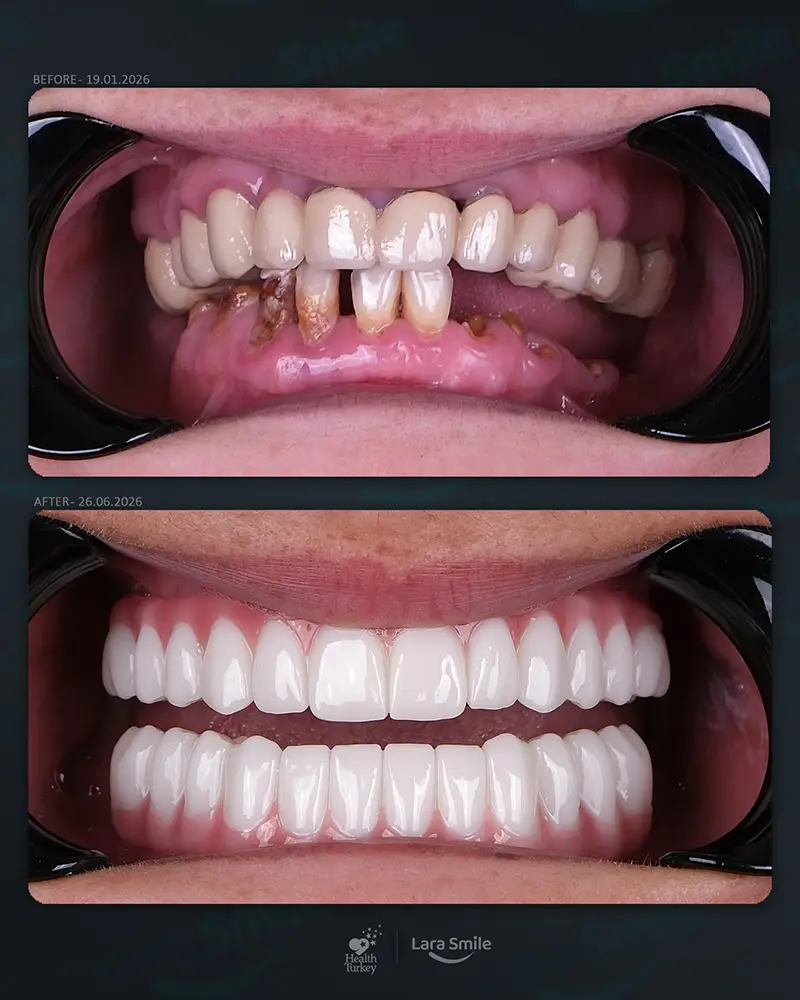
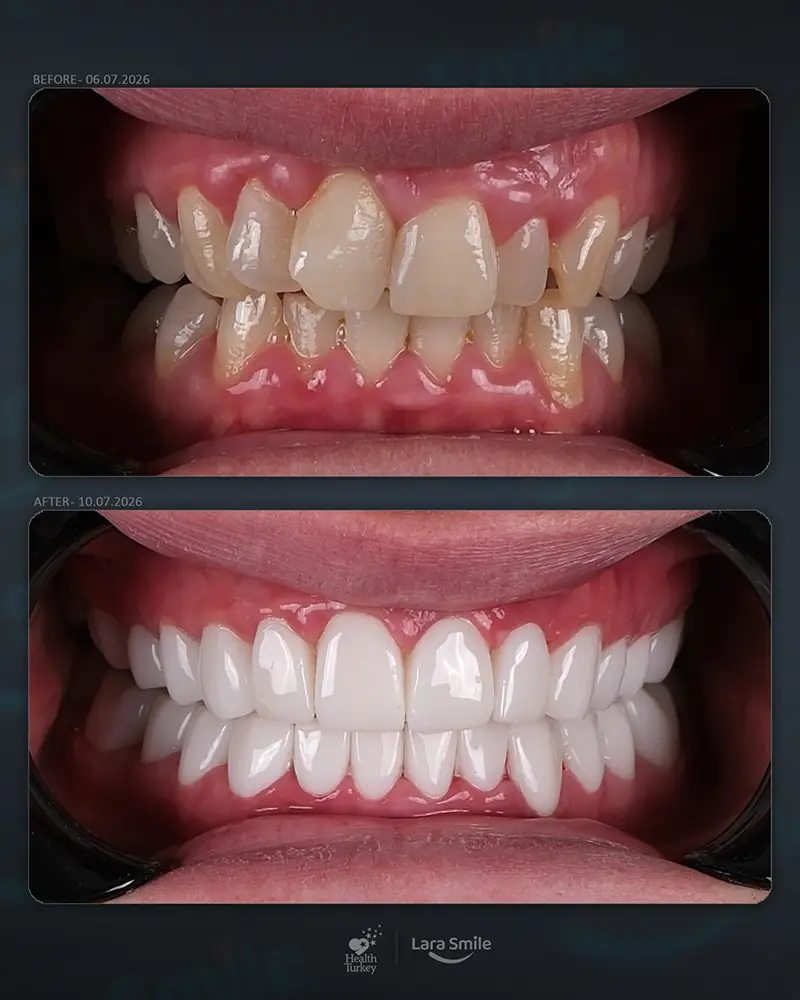
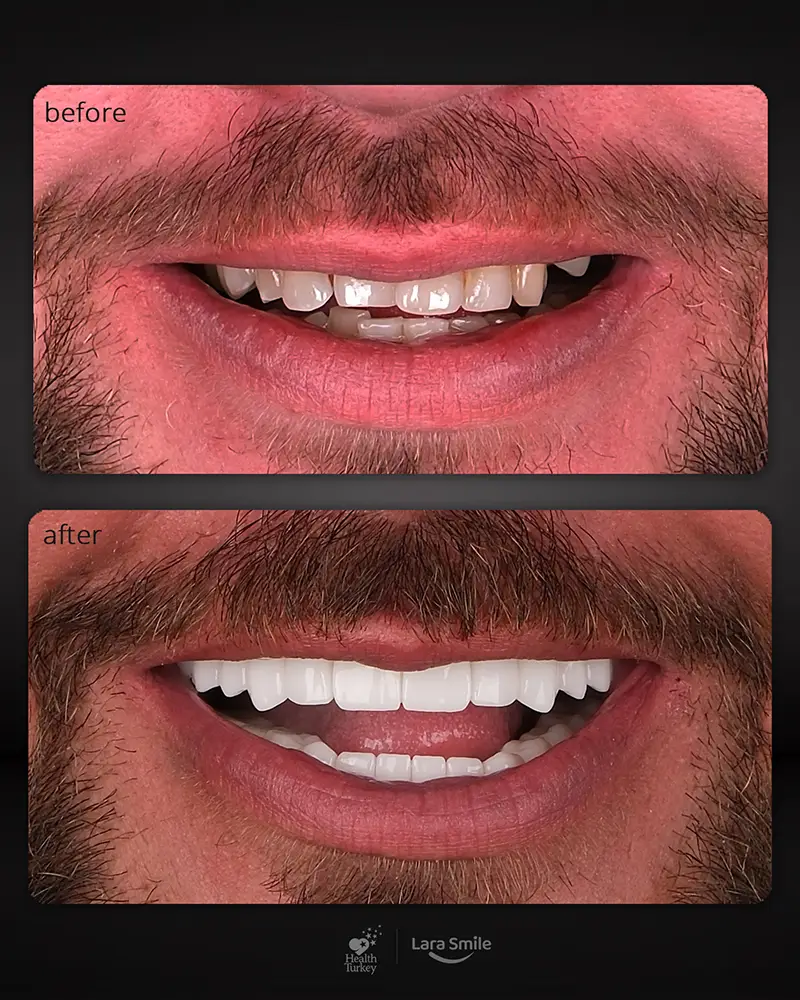
Dental Implants Before After Photos
What are the Most Common Types of Dental Implants?
There are two most common dental implant types: endosteal implants and subperiosteal implants. The main difference between these two types is how they are attached to your jawbone. The health and the condition of your jawbone affect the type of implant. Therefore, you need to get help from your doctor to determine which type of implant is the most suitable for you before your treatment start.
Endosteal implants are the most preferred type of dental implant. They have a small screw, cylinder, or blade shape. They are placed into the jawbone and, thus, hold teeth. Plus, endosteal implants are an alternative to a bridge or a denture.
Subperiosteal implants are placed on the jawbone. In subperiosteal implant surgery, a metal post is placed under the gum. This type of implant is suitable for you if you cannot wear ordinary dental dentures because the condition of your jawbone is not good enough. In addition, with this type of dental implant, you do not need to have a bone augmentation procedure for your jawbone.

Benefits, Risks and Aftercare
Dental implants can help restore chewing and the appearance of your smile. Your dentist should assess whether they are appropriate for you and discuss alternatives.
Treatment involves surgery. Possible complications include infection, injury to nearby tissues, altered sensation and implant loosening or failure. Smoking can affect healing.
Follow your dentist’s cleaning instructions and attend regular dental reviews. Contact your dentist promptly if an implant becomes loose or painful. Results and maintenance needs vary between patients.

How Long Does a Dental Implant Procedure Take?
The length of the dental implant procedure is different for each person. The procedure for dental implants may involve different specialists such as an oral maxillofacial surgeon, dentist, periodontist, prosthodontist who designs artificial teeth, and otorhinolaryngology specialist in the process.
The dental implant procedure usually asks for more than one operation. This is why you need to have a detailed dental examination and a review of your medical history ready. To plan the procedure, all the factors that can affect the process should be considered. The number of teeth the person needs to have implanted, whether it is a full dental implant or a single tooth implant, and the state of the jawline is significant. Thus, a personalized treatment plan can be prepared by the dental specialist.
How Soon After Tooth Extraction Can You Have an Implant?
The length of time you need to wait after tooth extraction to have dental implants is decided according to the treatment plan. Since the condition of the jawbone and the health of the gums vary from person to person, the waiting period in the treatment plan also varies. Thenceforth these two conditions are very important for dental implants, and they are the main factor in determining the time required after tooth extraction. There are three main options in this process.
Immediate Implant Placement
It is possible to have a dental implant immediately after tooth extraction in some cases. If you do not have any gum disease and your jawbone is strong enough, you can have your implants immediately.
Early Implant Placement
If your gums need to heal after tooth extraction, your treatment plan may require waiting two or three months. Also, if there is a gum infection, it is necessary to clear the infection before the implant is placed. Waiting two or three months for a dental implant procedure does not cause the jawbone to deteriorate. In this way, the implant procedure can be completed without needing a graft.
Delayed Implant Placement
If there is a serious gum infection in the mouth or if the tissues are significantly damaged because of tooth extraction, it may be necessary to wait more than three months. In this case, you may need some additional treatments and grafts. When the jawbone and tissues reach a healthy structure, the dental specialist can place the dental implants.
Do Teeth Implants Fall Out?
Dental implants can loosen or fail. This may be related to infection, healing problems or mechanical issues. A loose or painful implant should be assessed promptly by your dentist. Discuss your individual risks and treatment options during your assessment.


Lara Smile Dental Clinic Turkey
Speak to the Lara Smile team about your treatment goals and arrange an individual assessment. Ask your dentist to explain suitable options, their potential benefits and risks, and the care they may require. A personalised treatment plan should reflect your clinical needs and preferences, with clear information to help you make an informed decision.
We use implant systems from international brands, including Straumann, Nobel Biocare, Astra Tech and Osstem. Ask your dentist to confirm the proposed implant brand in your individual treatment plan.
FAQ of Dental Implants
How much do dental implants cost in Turkey?
Dental implant costs in Turkey depend on the number of implants, the materials used, and the complexity of your treatment. At Lara Smile Dental Clinic in Antalya, we offer personalised treatment plans with transparent pricing. Contact our team for a free consultation and a detailed quote.
Is getting dental implants painful?
Dental implant surgery is performed under local anaesthesia, so you should not feel pain during the procedure. Some mild swelling or discomfort is normal afterwards, but this can usually be managed with prescribed medication. Our dental team will guide you through every stage of recovery.
How long do dental implants last?
Dental implants can last for decades with proper care, and many remain functional for a lifetime. Their longevity depends on oral hygiene, gum health, lifestyle habits, and regular dental check-ups. The crowns or bridges attached to implants may need replacement over time.
What is the difference between All-on-4 and All-on-6 dental implants?
All-on-4 uses four implants to support a full arch of replacement teeth, while All-on-6 uses six implants. Both treatments are designed for patients who have lost most or all of their teeth. The best option depends on your jawbone condition, oral health, and individual treatment needs.
How many days do I need to stay in Turkey for dental implants?
Dental implant treatment often requires two visits to Turkey. The first visit typically lasts around 3 to 7 days for implant placement. After a healing period of approximately 3 to 6 months, a second visit is usually needed to fit the final crowns or bridges. Your exact schedule will depend on your treatment plan.
Can I get dental implants if I have bone loss?
Yes, dental implants may still be possible if you have experienced jawbone loss. Depending on your condition, additional procedures such as bone grafting or sinus lifting may be recommended. Our dental team will assess your bone structure using diagnostic imaging to determine the most suitable treatment.
Can I get temporary teeth on the same day as my implants?
In some cases, temporary fixed teeth can be fitted on the same day as implant surgery. This approach is often called “Teeth in a Day.” However, eligibility depends on implant stability, bone quality, and your overall oral health. Your dentist will determine whether immediate loading is suitable for you.
Are dental implants better than dentures?
Dental implants provide a fixed and stable alternative to traditional removable dentures. They can improve chewing comfort, help preserve jawbone, and offer a more natural feel. However, the best solution depends on your oral health, preferences, and budget.


